By Samantha Lisle Muller
Social Worker, Muscular Dystrophy Foundation of South Africa
– Cape Branch
“I think you need to meet me first because I’ve never seen myself as a model.”
Those were the words I said when Ms Marlene le Roux, CEO of Artscape, invited me to become one of the models for the South African edition of the internationally acclaimed Bold
Beauty Project.
The truth is, becoming a model was never part of my plan. As a social worker at the Muscular Dystrophy Foundation of South Africa (MDF), I am always looking for opportunities to
raise awareness about muscular dystrophy and other neuromuscular conditions and to promote greater inclusion for people living with disabilities. Some time ago, a MDF client, who was once crowned Miss Wheelchair South Africa, shared Ms Le Roux’s WhatsApp number with me. I sent her a message last month introducing myself and the work of the Muscular Dystrophy Foundation and asked her to keep MDF in mind whenever Artscape hosted disability awareness events or projects.
To my surprise, our conversation took an unexpected turn.
Instead of discussing future collaborations, Ms Le Roux asked whether I would consider
becoming one of the models for the South African chapter of the Bold Beauty Project.
My immediate response was, “I think you need to meet me first because I’ve never
seen myself as a model.”
She invited me to Artscape on Saturday, 6 June 2026, and without realising it at the
time, that meeting became the start of one of the most memorable experiences of my life.
A Meeting That Changed My Perspective When I arrived at Artscape on 6 June, I had
no idea what to expect.
I met Ms Marlene le Roux in person for the first time. As someone who also lives with a
disability, she immediately made me feel welcome. I also met the other women taking
part in the project, along with the presenters, photographers and the dedicated Artscape
team who would bring the exhibition to life.
Listening to the stories of the other women reminded me that every person has a unique journey. Although our disabilities and life experiences differed, we all shared something in
common—we wanted to be seen for who we are rather than be defined by our disabilities.
Each model was paired with her own photographer. Two days before my photoshoot, I met with my photographer so that we could get to know one another. Rather than simply discussing
poses or photographs, he wanted to understand who I am as a person, the work I do at MDF and what is important to me.
That conversation helped me feel comfortable long before I stepped in front of the camera.
Lights, Camera… Confidence
The photoshoot took place on 20 June 2026, and by then my nervousness had turned into excitement. I believe I was the last model to join the project, which made me feel incredibly
fortunate to have been included.
I decided to embrace the experience wholeheartedly. The day before the shoot, I had my hair and nails done. When I arrived at the venue, a member of the Artscape team gave my hair a
few final touches before I was introduced to two talented makeup artists from Roxy Marosa, who made me feel absolutely glamorous.
Then came the dress.
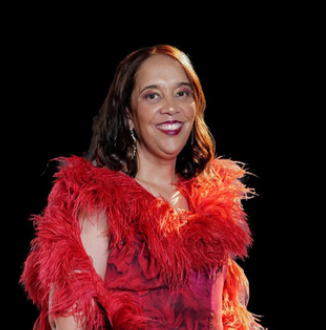
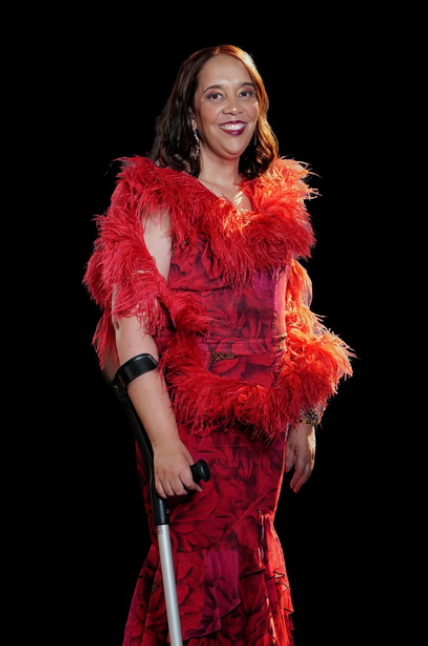
I was given a stunning red gown that made me feel like a Hollywood movie star. As I looked in the mirror, I saw a version of myself that I had never really allowed myself to see before.
For a moment, I wasn’t thinking about my disability or the daily challenges that come with living with congenital myopathy, a rare genetic neuromuscular condition that causes progressive
muscle weakness. I simply felt beautiful, confident and excited.
From the moment the camera started clicking, I couldn’t stop smiling. I laughed, I posed, and I genuinely enjoyed every minute of the experience. Looking back, I think that excitement
is reflected in every photograph.
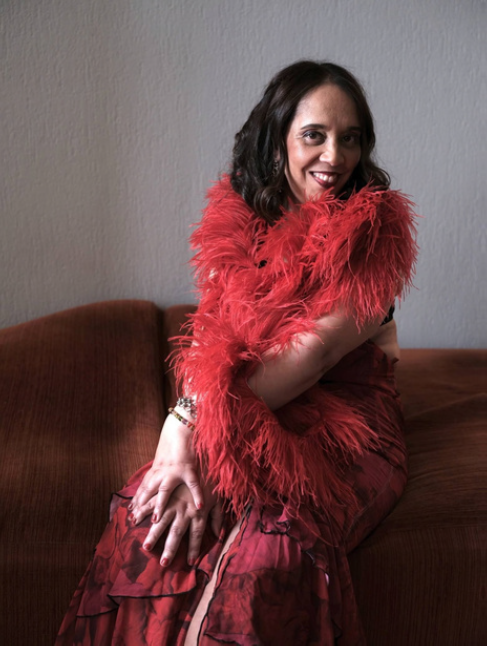
Embracing Every Part of My Story
One decision was never in doubt—I wanted my crutch to be part of my portrait.
My crutch is part of my everyday life and part of my story. I didn’t want to hide it or pretend
it didn’t exist. Instead, I wanted to show that disability and beauty are not opposites. Using
a mobility aid does not diminish confidence, femininity or strength.
That, to me, is exactly what the Bold Beauty Project represents.
The project began in the United States and has grown into an international movement
that celebrates visibility, dignity and inclusion through photography. This year, it comes to
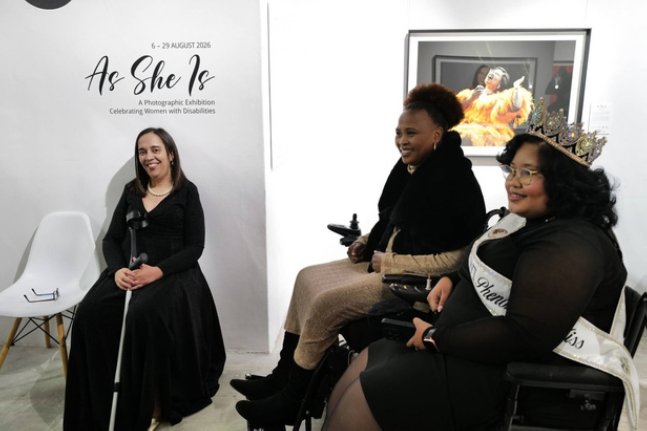
Africa for the very first time through the exhibition As She Is, featuring seventeen
women from across the Western Cape.
Rather than focusing on disability, the exhibition invites visitors to see each woman
as a whole person—someone with dreams, personality, confidence, resilience and a
story worth telling.
A Moment I’ll Never Forget
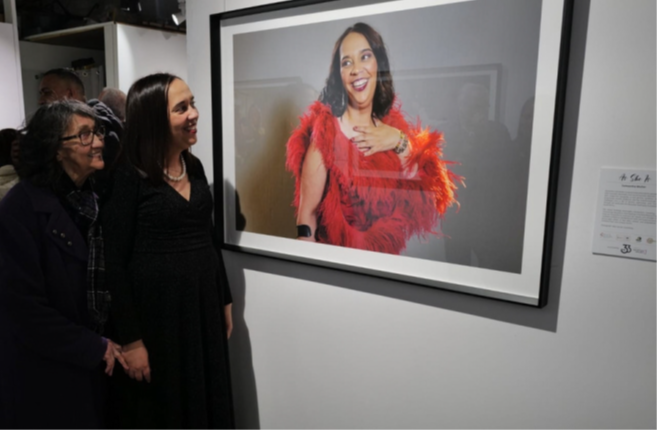
A few weeks after the photoshoot, I was invited to view the photograph that had been
selected for the exhibition and was asked to write a short biography to accompany it.
Seeing the final image was an emotional moment.
As I reflected on my journey while writing my biography, I realised just how much this experience had meant to me. What started as a simple WhatsApp message to create opportunities
for the Muscular Dystrophy Foundation had unexpectedly become an opportunity to represent not only myself, but also the wider neuromuscular community.
The exhibition, As She Is, opened to the public from 6–29 August 2026 at 33BREE, The Artists Gallery’s dedicated project and exhibition space in Cape Town’s city centre. As the first African presentation of the internationally acclaimed Bold Beauty Project, it celebrates the individuality, courage and humanity of seventeen extraordinary women from the Western Cape.
More Than a Model
When I think back to my first response to Ms. Marlene le Roux —”I think you need to meet me first because I’ve never seen myself as a model”—I can’t help but smile.
She saw something in me that I couldn’t yet see in myself.
The Bold Beauty Project did not change who I am. Instead, it changed the way I see myself. It reminded me that beauty is not defined by physical ability, but by authenticity, courage and self-acceptance.
As a social worker at the Muscular Dystrophy Foundation of South Africa, I have the privilege of walking alongside individuals and families affected by muscular dystrophy and other neuromuscular conditions every day.
This experience has strengthened my belief that representation matters. When people living with disabilities are seen, celebrated and included, it challenges stereotypes and helps build a society where everyone belongs.
I hope my journey encourages others living with disabilities to embrace opportunities that
may seem unexpected or even intimidating.
Sometimes all it takes is one conversation, one opportunity—or even one WhatsApp message—to discover a new way of seeing yourself.
I hope this story serves as a reminder that every person deserves to be seen, valued and celebrated exactly as they are.